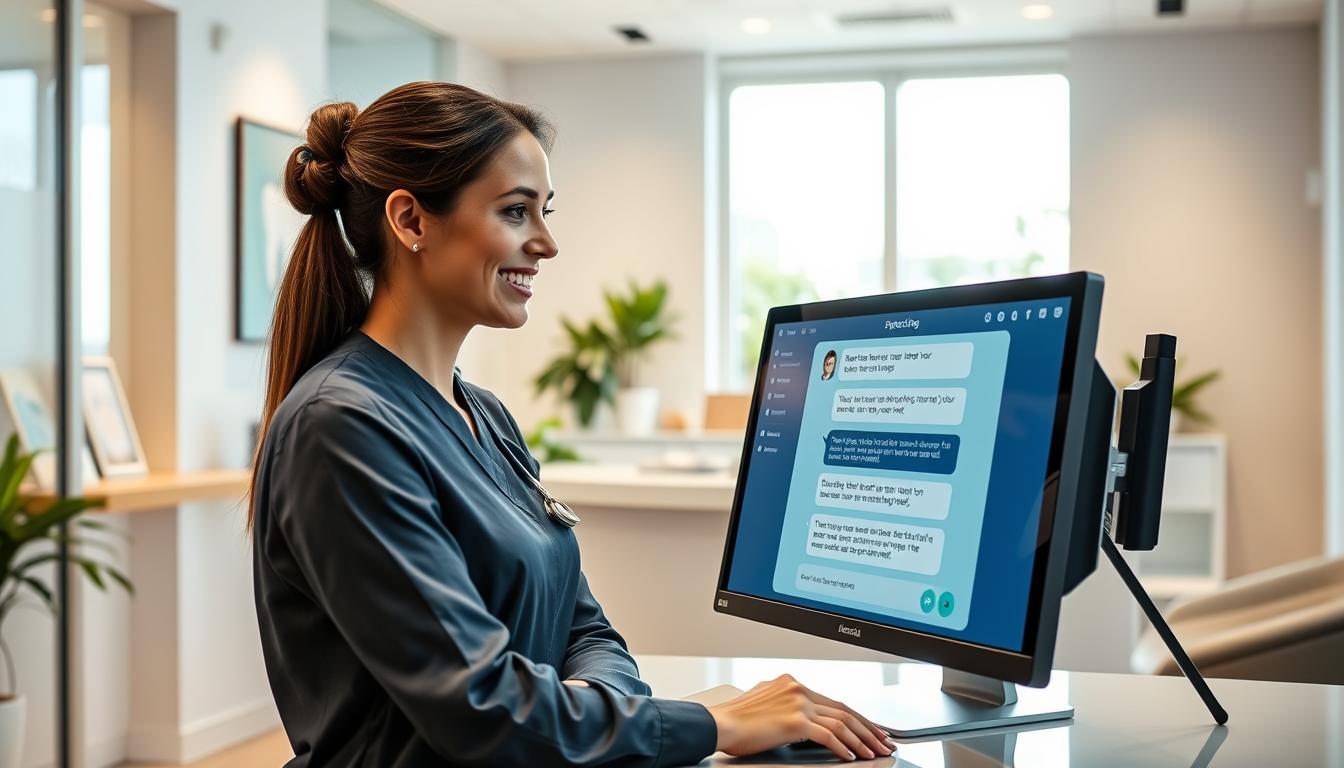
Your website is often the first place a patient decides whether to call, book, or leave. A dental clinic website chat helps you meet that moment with clear answers and a simple next step. Done well, it turns browsing into action without piling more work on your front desk.
A pre-sales chatbot for dentists focuses on the questions that stop people from booking: treatment options, rough pricing ranges, timing, and what happens next. It supports patient acquisition automation by giving instant replies, capturing details, and guiding visitors to the right booking path. This means fewer lost online dental enquiries and stronger dental practice conversion.
This is a how-to guide for building a pre-sales chat experience that drives dental lead capture with less fuss. You can Start Free and upgrade later, so you only scale once results are proven. When you are ready to set it up, register here: https://billing.chatbotamico.com/register.
Under the hood, we rely on the Amico Core Intelligence engine to keep conversations accurate and calm. Fuzzy Matching helps the assistant understand misspellings and treatment shorthand. Guaranteed Customer Journeys keep the chat moving towards a booking, a call, or a qualified follow-up.
You also get practical controls for day-to-day management: Bulk Import/Export for fast updates, Role-Based Access Control (RBAC) for safer access, and Missed Query Logging to spot gaps and improve coverage. The article is written in British English, while showing you how to optimise wording for United States visitors, including currency, insurance terms, and HIPAA-aware prompts.
Key takeaways
- A dental clinic website chat can turn anonymous visits into booked appointments with less friction.
- A pre-sales chatbot for dentists answers common questions fast and keeps patients moving forwards.
- Patient acquisition automation works best when chat captures details and offers clear booking routes.
- Strong dental lead capture reduces drop-offs from online dental enquiries, especially on pricing and availability.
- Dental practice conversion improves when journeys are guided, not free-form.
- Amico Core Intelligence engine features like Fuzzy Matching and Guaranteed Customer Journeys improve accuracy and outcomes.
- Bulk Import/Export, Role-Based Access Control (RBAC), and Missed Query Logging make governance and continuous improvement straightforward.
Why a pre-sales chat assistant matters for patient acquisition
Most visitors come to your site with a clear goal. They might be looking for relief, a better smile, or a quick answer. If they can’t get the information they need in seconds, they leave. This slows down dental patient acquisition.
A pre-sales chat assistant makes things easier. It helps turn uncertainty into action quickly, without adding stress to your front desk.
Speed to answer: reducing drop-offs on service and pricing queries
Speed is key when it comes to enquiries. When someone asks, “How much is teeth whitening?” or “Do you do Invisalign?” they are often comparing you with other clinics.
Instant dental pricing guidance helps a lot. You can share realistic price ranges, explain what affects cost, and suggest the next step. This leads to fewer lost leads, more booked calls, and less phone traffic for reception.
Trust signals: creating confidence before the first call
Trust is built before the first call. Trust-building patient communication should sound calm and professional, not robotic. It sets clear boundaries: what the chat can help with and when a clinician must advise.
You can show clear trust signals: opening hours, what to expect at a first visit, finance options, and how insurance is handled. Keep it compliant by avoiding health details, using short disclaimers, and offering a clear “speak to a person” option when needed.
After-hours coverage: capturing leads when the front desk is closed
In the United States, search traffic often spikes after work and on weekends. If you miss after-hours dental enquiries, you miss patients who are ready to choose now.
A chat assistant captures contact details, preferred times, and urgency, then routes call-back requests for the next business day. This protects staff time while keeping dental patient acquisition steady. Your dental website conversion rate also benefits from 24/7 coverage.
| Visitor moment | What they need right now | Chat assistant response | Business impact |
|---|---|---|---|
| Pricing check for whitening or aligners | Fast range, what changes the cost, next step | Instant dental pricing guidance with simple ranges and a prompt to book or request a call-back | Higher dental website conversion rate from fewer drop-offs |
| Urgent pain or broken tooth late evening | Whether you can see them soon and what to do next | Captures after-hours dental enquiries, shares emergency availability rules, and escalates to a human option | More captured enquiries without relying on staff availability |
| First-time patient comparing clinics | Reassurance, clear process, credible signals | Trust-building patient communication: expectations, finance prompts, and clean handover to reception | Stronger confidence before the first call, supporting dental patient acquisition |
Pre-Sales Chat Assistant for Dental Clinic: core use cases that convert
Not every visitor is ready to book on the spot. A pre-sales assistant helps you move each person to the next best step. This could be a call, a consultation request, a short form, or online appointment booking dental.
Done well, the chat stays clear and safe. It shares practical guidance, avoids diagnosis, and keeps momentum towards a real follow-up.
Handling common treatment enquiries (cleanings, whitening, implants, orthodontics)
Your dental treatment enquiries chatbot should answer the questions people ask most. Share details about the visit, who it may suit, typical time in the chair, basic prep and aftercare, and pricing ranges.
For high-intent pages, structure matters. With implants enquiries online, confirm key basics (such as general suitability and timelines) and then guide the patient to a consultation request. There, your team can verify details.
For orthodontics lead capture, keep prompts simple. Ask about age range, main goal (straightening or bite), and preferred appointment window. Then offer a clear booking route without pushing clinical advice.
Insurance and finance prompts without overwhelming the patient
Money questions can stop a chat cold. Use dental insurance prompts that feel light. Ask about insurer name, whether they know their plan type, and a note that cover is confirmed by your front desk.
For patients asking about monthly payments, present dental financing options in plain language. Explain that financing may be available, then collect the best contact method. This way, your team can share verified steps and any required checks.
New-patient intake: collecting essentials for follow-up
New patient intake automation works best when it is minimal. Ask for name, phone or email, preferred location (if you have more than one), preferred days or times, service interest, and whether it feels urgent.
Keep privacy front and centre. Avoid medical history in chat unless it is truly needed. Use short, clear wording so people do not feel trapped in a long interview.
Booking intent: guiding users towards calls, forms, or online scheduling
Booking intent shows up in quick signals: “book”, “appointment”, “consultation”, “today”, “price”, and “near me”. When you spot these, offer three fast choices and let the patient stay in control.
| Visitor signal | Best next step | Why it works |
|---|---|---|
| “Can I book an appointment?” | online appointment booking dental | Reduces friction for high-intent patients who want a confirmed time fast |
| “Do you take my insurance?” | dental insurance prompts | Captures just enough detail for a quick verification call-back |
| “How much are implants?” | implants enquiries online | Shares pricing ranges safely, then routes to a consultation for a tailored plan |
| “I want braces or aligners” | orthodontics lead capture | Qualifies interest with a few prompts and moves to a consultation request |
| “Can I pay monthly?” | dental financing options | Offers reassurance without promises, then hands off to your team for confirmation |
| “I’m new here” | new patient intake automation | Collects essentials once, so your staff can follow up without repeating questions |
How to design high-intent customer journeys that feel human
A good patient journey design is calm, clear, and focused. It aims to help people move forward quickly and easily. This way, your dental chatbot feels human because it values time and reduces uncertainty.
Conversation flows for first-time visitors vs returning patients
First-time visitors need to know what you offer and how to book. Your chatbot should guide them from interest to action in a few steps. It should also offer an option to leave details for later.
Returning patients want things to go fast. Offer quick answers for things like opening hours, directions, and payment questions. In a multi-location dental clinic, confirm the location before showing times or policies.
Qualifying questions that respect privacy and minimise friction
Use privacy-first lead qualification. Ask only what you need to help. This includes service interest, timeframe, location preference, and contact method.
Don’t ask for detailed symptoms or health details unless necessary. Make those fields optional. Use simple consent cues like If you’d like, share your phone number and we’ll call you back. This keeps the chat reassuring while capturing leads.
Escalation rules: when to hand off to reception or a treatment co-ordinator
Write clear rules for when to escalate chats to receptionists. This should be smooth, not sudden. Escalate for urgent needs, complex insurance issues, or suitability questions.
Route chats correctly: reception for scheduling, treatment co-ordinators for specific services, and billing for finance checks. Add a safety note that chat doesn’t replace dental advice, then move them on.
Personalisation: tailoring prompts by service page, location, and opening hours
Personalised messaging should match what visitors are looking at. On implant pages, offer consultations and finance options. On whitening pages, show pricing and availability.
In a multi-location dental clinic, use location and hours to guide prompts. Offer open now, closed with call-back, or nearest clinic options. This keeps the experience consistent and local.
| Moment in chat | What you show | What it achieves |
|---|---|---|
| First visit on a service page | Service-specific prompt + simple booking choice | Higher intent with fewer clicks and less uncertainty |
| Returning patient seeking basics | Fast buttons for hours, directions, rescheduling, payments | Shorter time to answer and lower front-desk load |
| Lead capture | privacy-first lead qualification with optional contact details | More completed handovers without over-collection |
| Complex or urgent request | chat escalation to receptionist or the right team | Safer outcomes and fewer stalled conversations |
Deploy our high-performance SaaS solution: Start Free and upgrade later
You can introduce a dental chatbot SaaS step by step. First, test it and see if it works. Then, scale it up when you see results.
Start with our free plan to see how it boosts your bookings. Upgrade only when the numbers show it’s worth it.
To begin, sign up directly at https://billing.chatbotamico.com/register. Setting it up is easy, so you don’t lose time.
Implementation options let you use the chatbot across different channels and campaigns.
Implementation options: website widget, landing pages, and click-to-chat
Install a website chat widget on key pages like home and contact. It helps visitors by offering clear next steps.
For ads and special offers, use a landing page chat assistant. It keeps the message focused, saving you from wasted traffic.
For quick starts, use click-to-chat dental links. They’re simple, perfect for mobile users, and easy to test.
Brand alignment: tone of voice, disclaimers, and compliance-friendly prompts
Your chat should match your practice’s voice. We help you sound human but avoid giving medical advice.
Use clear disclaimers to protect everyone. This includes non-clinical chat and urgent prompts to call immediately. Your language should be simple and respectful, following British English standards.
Our prompts are designed to be safe. You only collect what you need for follow-ups, and avoid sensitive info unless a staff member takes over.
Lead capture and routing: email alerts, CRM connections, and call-back requests
Lead capture works best when it reaches the right person quickly. Our dental lead routing sends alerts to the right inbox and captures call-back requests.
For tracking and follow-up, our fields are consistent and exportable. If you need to integrate with your CRM, you can do so without losing any data.
We keep things secure: Role-Based Access Control (RBAC) limits who can edit scripts and publish changes.
Go-live checklist: testing, edge cases, and staff training for handovers
- Test each service flow and booking CTA, including after-hours behaviour and opening hours logic.
- Probe edge cases: typos, slang, treatment synonyms, and unclear intent that can stall a chat.
- Train handovers: who monitors alerts, target response times, and how reception continues the thread without repeating questions.
- Use Missed Query Logging to spot gaps, then patch them fast.
- Apply Bulk Import/Export to update multiple locations or services in one pass.
| Deployment path | Best fit | What you validate | Operational guardrails |
|---|---|---|---|
| website chat widget dental on high-intent pages | Practices wanting steady capture from organic traffic | Enquiry volume, page-to-chat rate, booking handovers | RBAC for publishing, Missed Query Logging for gaps |
| landing page chat assistant for campaign pages | Implants, Invisalign, emergency dentistry adverts | Cost per lead, message match, drop-off points | Bulk Import/Export for fast updates across campaigns |
| click-to-chat dental from CTAs and buttons | Mobile-first traffic and quick questions | Speed to first interaction and call-back request rate | Structured fields for clean exports and routing rules |
| CRM integration dental leads with structured routing | Teams that need pipeline visibility and follow-up discipline | Conversion from lead to booked appointment | Field consistency, audit-friendly access controls |
Amico Core Intelligence engine: Fuzzy Matching and Guaranteed Customer Journeys
Patients don’t always type like they’re reading a brochure. They write quickly, skip words, and mix up terms. Amico is designed to be forgiving and goal-driven. This means your chatbot keeps moving forward, even when messages are unclear.
You get permanent access to the engine, including Fuzzy Matching and Guaranteed Customer Journeys. This ensures your chatbot performs well, even as more people use it. You won’t see a drop in service quality.
Fuzzy Matching: understanding misspellings, shorthand, and treatment synonyms
The Fuzzy Matching chatbot focuses on what the patient means, not their spelling. It can handle different ways of asking for things, like “ortho”, “invisalign”, or “whitening price”. It also links similar terms, such as “braces” and “orthodontics”, or “deep clean” and “scale and polish”.
This means fewer dead ends for patients. More people find a clear next step with confidence, rather than looking elsewhere.
Guaranteed Customer Journeys: keeping conversations on-track to a conversion goal
Patients might not always express their true intent clearly. Guided customer journeys help keep the chat focused on your goals. This could be to book, request a call-back, submit an enquiry, or call now, without feeling pushed.
When a human is needed, the system ensures a smooth handover. This protects the patient’s experience and saves your team’s time.
Knowledge coverage: services, pricing ranges, insurance basics, and policies
A good dental chatbot knowledge base answers common patient questions before they commit. It covers services, opening hours, locations, and contact options, as well as finance and policies like cancellations.
For sensitive topics, you can offer helpful ranges without making promises you can’t keep. A pricing range chatbot dental flow can set expectations, then suggest a call-back for a tailored quote.
Insurance questions need clear language. An insurance basics chatbot can explain common terms and next steps. It still prompts patients to confirm details with their insurer.
Missed Query Logging shows what patients asked that wasn’t answered. With Bulk Import/Export, you can update content quickly. This keeps your coverage up to date as services change.
Performance and reliability: maintaining responsiveness during peak traffic
Peak load is normal, with spikes in local search, campaign bursts, and after-hours activity. You want fast replies on every page and device, even when demand is high.
This is where reliable SaaS chat performance really matters. Consistent responses keep leads moving through the journey. They don’t stall when they’re ready to act.
| What patients type | How the engine interprets it | Best-fit path you can trigger | What you capture |
|---|---|---|---|
| “ortho price?” | Orthodontics pricing intent, shorthand recognised | Pricing range chatbot dental → call-back for assessment | Preferred time, contact details, treatment interest |
| “deep clean vs normal clean” | Service comparison; maps “deep clean” to scale and polish where relevant | Guided customer journeys → explain options → book | Service choice, urgency, booking intent |
| “do u take Delta Dental” | Insurance acceptance query, informal language parsed | Insurance basics chatbot → verification steps → enquiry | Insurer name, member type, follow-up request |
| “whitening price and time” | Cost + duration query bundled in one message | Fuzzy Matching chatbot → concise answers → book or call now | Service preference, availability, phone number |
| Operational need | What supports it | Why it stays stable at scale | How you improve over time |
| Accurate answers across pages | Dental chatbot knowledge base with consistent phrasing | One engine layer applied site-wide | Missed Query Logging highlights gaps |
| Fast updates without friction | Bulk Import/Export for content changes | Lower maintenance as services expand | Batch edits for new pricing bands and policies |
| Safe control for teams | Role-Based Access Control (RBAC) | Reduces risk from accidental edits | Clear ownership across locations and roles |
Optimise for the United States market using British English
You can keep a British English brand voice and still meet American patient expectations. The trick is to localise what patients mean, not how you spell. This balance makes your chat feel familiar, while your written standards stay consistent.
Start with language that supports US dental marketing without sounding salesy. Use US dental insurance terminology patients expect to see: dental insurance, in-network, out-of-network, financing, copay, and coinsurance. Keep your spelling rules intact, such as minimise, personalisation, and authorise, so your voice stays steady across every page.
Pricing needs care. Show USD with clear ranges, like “starting from” or “typical range”, and route people to confirmation. This matches American patient expectations and avoids overpromising when coverage, plan rules, or clinical needs change the final figure.
Scheduling should feel immediate. Offer same-day or next-day where possible, and add “call now” cues for urgent pain. If you operate across states, make time zones obvious so nobody books the wrong slot.
Build trust with HIPAA-aware website messaging. Keep the chat non-clinical, ask for only what you need, and steer emergencies to a phone call. You protect privacy and reduce friction at the same time.
- Use per-location paths: address, hours, parking cues, phone number, and service availability by clinic.
- Trigger service-page prompts: implants, whitening, orthodontics, and emergency visits each need different next steps.
- Apply RBAC so only authorised users can adjust US localisation for dental clinics, disclaimers, and lead-handling rules.
- Review Missed Query Logging weekly to capture phrases like “root canal cost with insurance” and fill content gaps fast.
| Patient need in the US | How you phrase it (British English rules kept) | Assistant behaviour that supports it |
|---|---|---|
| Insurance clarity using US dental insurance terminology | “We can help you check dental insurance options, including in-network and out-of-network cover.” | Ask plan type and employer/individual plan choice; offer a call-back for verification rather than a guarantee |
| Quick booking aligned to American patient expectations | “Same-day appointments may be available; please tell us your preferred time.” | Show next available windows by location and time zone; escalate urgent pain to “call now” |
| Price guidance without false precision | “Typical range in USD, confirmed after an exam and insurance checks.” | Provide ranges and routes to estimate requests; avoid collecting extra health details in chat |
| Privacy reassurance through HIPAA-aware website messaging | “Please don’t share sensitive medical details here. We’ll keep this short and safe.” | Minimise fields; store only contact and intent; prompt phone contact for emergencies |
| Consistent identity for multi-location groups | “Our team will personalise the next steps for your chosen clinic.” | Lock core wording via RBAC; log missed queries to refine US dental marketing pages and scripts |
Conclusion
A pre-sales chat assistant for dental clinics is more than just a tool. It provides quick answers, reassurance, and clear booking paths. Fast site responses mean more visitors stay and turn into real enquiries.
Using a dental lead generation SaaS, you can automate enquiries while keeping a personal touch. It guides visitors through their journey, from service questions to booking. This leads to more bookings without overloading your front desk.
As your clinic grows, you stay in charge. Role-Based Access Control (RBAC) keeps access organised across teams. Bulk Import/Export makes updates quick and easy. Missed Query Logging helps you improve your chat service.
Amico Core Intelligence ensures your chat system is reliable. It catches spelling mistakes and keeps conversations on track. Start with a free trial and upgrade when you see the benefits:
https://billing.chatbotamico.com/register
Leave a Reply